



ESO has been gathering input from the community about the next transformational facility that will advance humanity’s understanding of the Universe whilst fostering international collaboration.
ESO has been gathering input from the community about the next transformational facility that will advance humanity’s understanding of the Universe whilst fostering international collaboration.
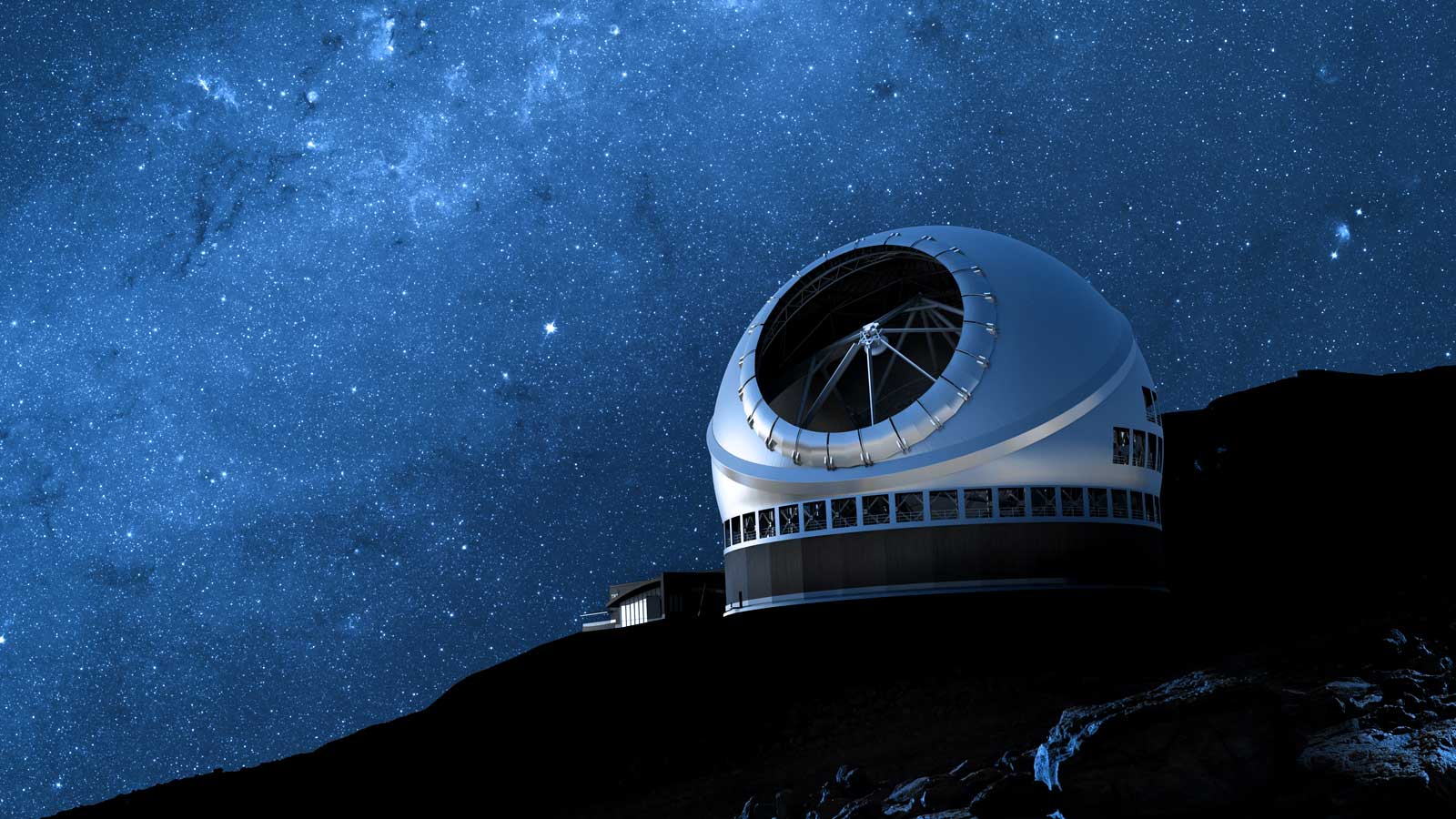
A new collection of international white papers submitted to “ESO Expanding Horizons: Transforming Astronomy in the 2040s” showcases the extraordinary scientific potential of a 30–40 meter class Extremely Large Telescope (ELT) in the Northern Hemisphere and highlights the unique contribution the Thirty Meter Telescope would make to global astronomy. Led by Spanish researchers and co-authored by scientists from across Europe and around the world, the papers reflect a broad and growing international alignment on the importance of expanding humanity’s view of the Universe.
ELTs will achieve scientific goals that no other ground or space-based telescope will be capable of. Together, the white papers describe how ELTs can address some of the most profound questions in science: how stars and planets form, how galaxies grow and evolve, and how the Universe itself is shaped by dark matter, dark energy, and extreme cosmic events. The collection emphasizes discoveries enabled by rapid response to transient phenomena, deep exploration of the distant Universe, and high-resolution observations of nearby stars and galaxies. Many of these breakthroughs depend critically on access to the northern sky, including key regions of star formation, nearby galaxy clusters, and rare cosmic events that cannot be fully studied from the Southern Hemisphere alone.
JWST NIRCam view of the nearby, grand-design “Whirlpool” spiral galaxy, M51, is only observable by a northern hemisphere telescope. Credit: ESA/Webb, NASA & CSA, A. Adamo (Stockholm University) and the FEAST JWST team.
The message from the community is clear: achieving full-sky coverage with extremely large telescopes is essential to maximize scientific return in the coming decades. By complementing southern observatories and working in synergy with flagship space missions such as JWST, Euclid, and Roman, the Thirty Meter Telescope would provide unparalleled observing power, global reach, and rapid-response capability. This collection underscores both the international collaboration behind modern astronomy and the pivotal role TMT can play in enabling transformative discoveries for science and society.
You can get a copy of the white papers and read about this amazing science here:
A collection of international white papers submitted to “ESO Expanding Horizons: Transforming Astronomy in the 2040s” showcases the extraordinary scientific potential of a 30–40 meter class Extremely Large Telescope (ELT) in the Northern Hemisphere and highlights the unique contribution the Thirty Meter Telescope would make to global astronomy. Led by Spanish researchers and co-authored by scientists from across Europe and around the world, the papers reflect a broad and growing international alignment on the importance of expanding humanity’s view of the Universe.
TMT IRIS FDR-1 Successfully Completed
TMT LGSF Optical Path Final Design Review Successfully Completed